




From quote to production. No retyping.

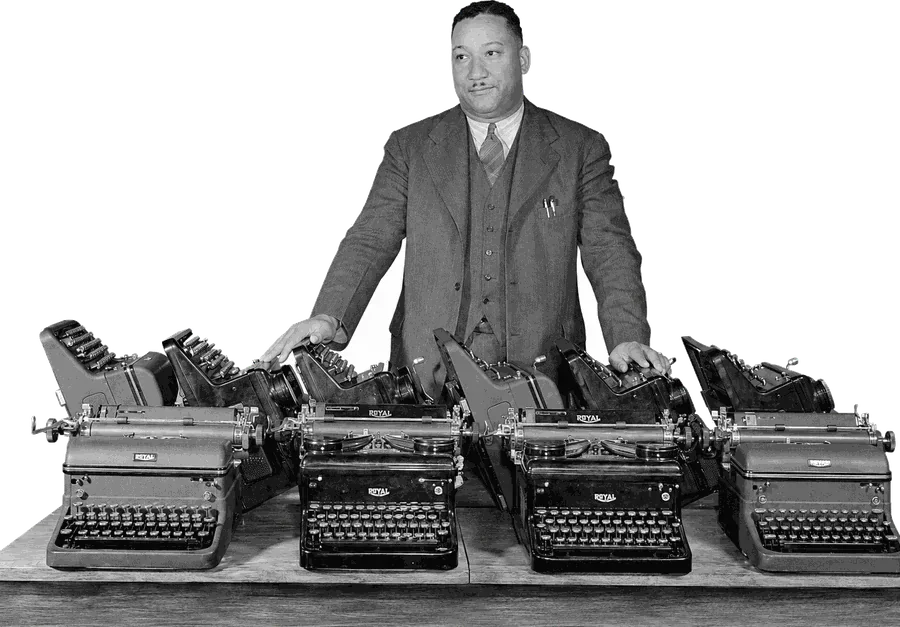
An archive photograph of a clerk standing behind four
                typewriters, one hand resting on each of the middle two.

Custom software for manufacturers who also sell what they make. We connect the systems you already run: quoting, CAD/BOM, ERP, production.

Every order, from a tender, a dealer or your own sales team, reaches the shop floor clean.

02 · Where the work actually happens

Right now, your people are the link between your systems.

  • Your ERP was built for the order that repeats. Yours mostly don't

    The special size, the dealer's exception, the change order mid-build — they leak into a spreadsheet, with no status and no record. Usually your best-margin work.

  • So the same order gets typed in three or four times

    Quoting, CAD, ERP, production. One wrong digit is a remade panel.

  • And it's your most expensive people doing it

    A quote waits days for the one engineer who knows how the product really goes together.

None of this appears as a line in your P&L. It appears as late deliveries, remade parts, and hours nobody ever bills for.

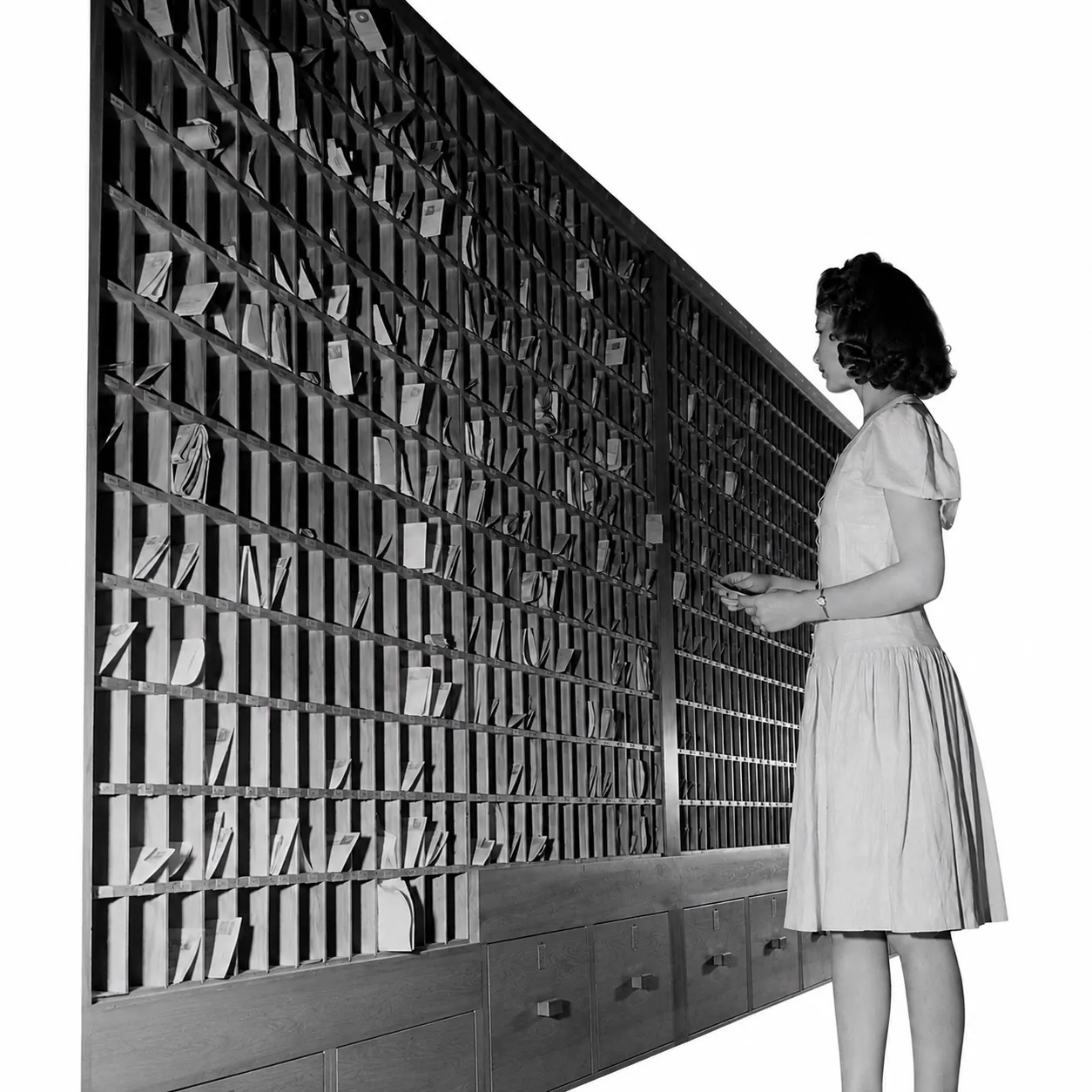
An archive photograph of a clerk at a wall of pigeonhole
                  card files.
03 · Who it's for

We build for manufacturers whose orders are too custom for off-the-shelf systems.

Make-to-order manufacturers, where no two orders are quite the same.

Our solutions are a good fit if:

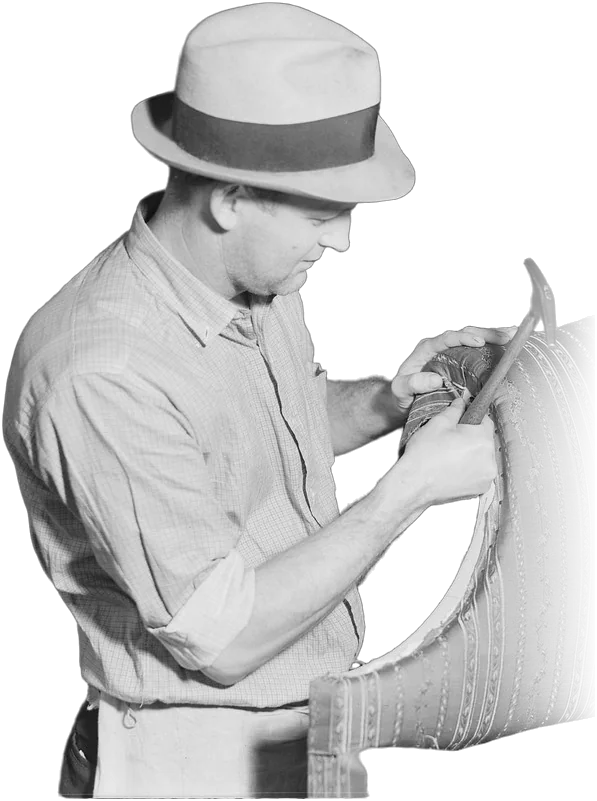
  • An upholsterer in a felt hat fitting striped fabric to the arm of a sofa.

    Almost every order is a little different (sizes, options, materials), and you make and sell it yourself.

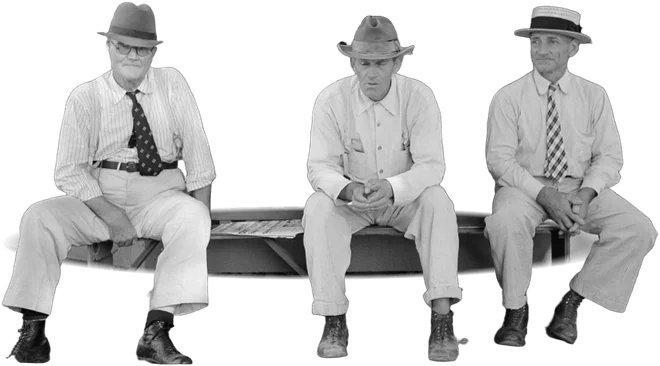
  • Three men on one bench in a courthouse square, each sitting apart with his hands in
                his lap, none of them turned to another.

    Your ERP, CAD and CRM all work,
    but not with each other.

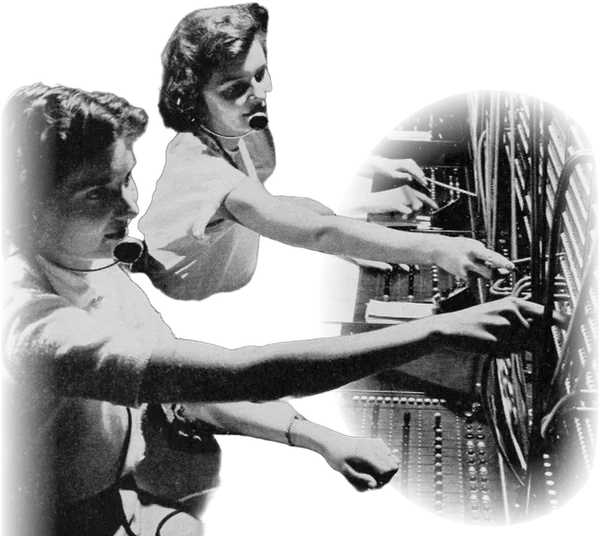
  • A row of switchboard operators, every pair of hands reaching for a different jack.

    Orders reach you from several directions:
    tenders, dealers, reps, your own sales team.

  • A foreman in a hat keeping four ledgers open at once, copying between them by hand.

    One person is the bridge between them, and that person is expensive, busy and hard to replace.

We know how these products get made.

  • Retail displays & store fixtures
  • Exhibition stands
  • Contract & office furniture
  • Cabinetry & millwork
  • Windows, doors & fenestration
  • Industrial enclosures & equipment

Sound like you?

Interlude · The one form

Start with one order.

Show us how one order moves through your systems today. We'll show you where it stops being digital, in 45 minutes. Three lines below is all we need to set it up.

Thanks — we received your request

We'll contact you to arrange the next step.

04 · Solutions we provide

What we build.

Six solutions. Each one has been built for a manufacturer with a problem shaped like yours, and each one gets rebuilt around how your factory actually works.

AI-first approach
01order intake

Order-to-Production Hub

Every order, typed once.

Tenders, dealers, reps, your own sales team – four channels, one intake. A messy email or PDF is read into a structured order, and a part number that doesn't exist is caught at the door.

Today

The price lives in his head and in a spreadsheet only he opens. Nobody else can quote without him.

On the system

The same record moves through CAD, ERP and the floor untouched. There is nothing left to mistype.

An order that detours through a person at every hand-off, against the same order carried straight through.Today: an order runs quote → CAD/BOM → ERP → production → delivery, and at each of the four hand-offs the line leaves the systems and goes up through a person who retypes it — the panel is remade and the order ships late. On the system: the same five stages, but one layer sits between them and joins them into a single system, so the order is carried straight across every hand-off and it ships on the promised date.1retypedby hand2retypedby hand3retypedby hand4retypedby handquotecad / bomerpproductiondeliveryremade · shipped lateVS.one layer between them · they run as onequotecad / bomerpproductiondeliveryships on the promised date
02the dealer channel

Dealer Order Desk

Dealers order themselves.

An ordering desk in your name, open around the clock. Each dealer signs in to their own price list, configures the product and sees the lead time before they commit.

Today

They email and wait for a price, then a confirmation, then for someone to key it in. Two or three days before it is an order at all.

On the system

Minutes, and it lands in the production queue. The channel can double without a second person behind the desk.

Six dealers queued behind three clerks, against a dealer ordering directly.Today: six dealers email in, and every pair of them waits on one of three clerks, who answers the price question and keys the order into your ERP by hand — two or three business days before it is an order at all. On the system: the dealer opens an order desk that is automated and open around the clock, sees the individual price that is theirs, presses place order, and it arrives in the production queue in minutes to hours.todayevery order handled by hand, one at a timedealerdealer1yourclerkdealerdealer2yourclerkdealerdealer3yourclerkyour erptwo or three business daysbefore it is an orderVS.on the systemthe dealer gets prices instantly and places orders directlydealer24/7 automated order deskindividualpriceplace orderproductionqueueminutes to hours
03quoting and engineering

Configure-to-Build Studio

Options in. Price and parts out.

Sizes, options and materials are picked on screen, and the combinations that can't be built can't be picked. Out comes the price, the parts list and the cut list, the same numbers the shop floor will build to.

Today

A quote needs your most experienced engineer, the only person who knows how the product really goes together. Everything queues behind them.

On the system

What that engineer knows is written down once and runs without them. Quotes go out while they are on the floor, or on vacation.

Four numbered quote requests waiting on one engineer, and a rules engine producing three outputs at once.Today: four dealers each send a numbered quote request, and each one waits on its own line for the same senior engineer, who takes them one at a time and sends nothing back for days. On the system: the options are switches, thrown one at a time, and the price re-reckons on the spot after each one — seconds, not days.todayone engineer is the bottleneckdealerdealerdealerdealerdealers and repsseniorengineerbeing priceddays to a pricequote 47quote 58quote 82quote 26quote 19quote 74quote 63quote 35VS.on the systemthe rules do the quotingprice$4354354541926842018514789380seconds to a price
04the awkward orders

Systems Bridge

For the orders your ERP can't take.

A companion app sits beside the ERP and carries the exceptions from quote to dispatch. Your ERP stays the system of record: nothing replaced, nothing migrated, no re-implementation project.

Today

The ERP refuses the non-standard order, so the order leaves the system, into a spreadsheet, into email, out of anyone's view.

On the system

It is handled next door and comes back as one clean record. The awkward orders have a status like everything else.

One queue of orders from dealers: the standard shapes go into the ERP, the awkward ones fall out into email.Today: orders arrive from dealers as one queue of mixed shapes. The ERP has three fixed intake ports — a circle, a square and a triangle — so the first shapes go straight in. The star, the diamond and the hexagon fit no port, so they are turned away and handled in Excel and email, off-system and with no status. On the system: the same queue reaches a companion app built as one model with a core: the awkward orders enter, orbit it, and pass on into the ERP still in the shape they arrived in — nothing is reshaped and nothing is retyped. The ERP is untouched and stays the system of record.todayit can't go in, so it leaves the systemdealersERPnon-standardexcel + emailoff-system.no status.VS.on the systemhandled beside the ERP, not instead of itdealerscompanion appERP
05status

Live Production Board

See where every order is.

One board, four lanes: intake, cutting, assembly, dispatch. Every order shows its ship date and what it is waiting on. The board updates itself from the work, not from someone's morning round.

Today

A whiteboard, a spreadsheet, a phone call, and none of them agree. Sales promises one date, the floor knows another.

On the system

One date, and everyone quotes it. A missing part surfaces two weeks before it becomes a late order.

Status scattered across five surfaces with two conflicting dates, and one board with one date.Today: the real status of an order lives on a whiteboard, in an Excel sheet, in email, in a phone call and on a sticky note — and sales quotes one ship date while the floor works to another. On the system: one board with four lanes — intake, cutting, assembly, dispatch — holding nine orders by number, two or three to a lane. Each order steps across on its own timing, and the ones reaching dispatch turn green. Under the board, three outcomes: ships on the date you promised, shortage flagged two weeks early, and sales answers “where is it?” without phoning the floor.todaystatus lives in five placesexcel sheetemailphone calljob 471?whiteboardtext messagesales: 12 sepfloor: 26 sepVS.on the systemstatus lives in oneintakecuttingassemblydispatch#471#465#483#457#492#438#506#449#474ships on the dateyou promisedshortage flaggedtwo weeks earlysales answers “where is it?”without phoning the floor
06the file everything runs on

Spreadsheet Rescue

The critical file becomes a system.

The logic your file already holds (the same formulas, the same numbers), rebuilt as an application. Several people in it at once, permissions, a full history, and a backup that isn't a copy on somebody's desktop.

Today

Everyone else waits their turn on it. It gets copied, versioned, quietly broken, and it leaves with them when they leave.

On the system

Nobody has to be careful with it any more. A wrong cell is undone, not discovered three months later, and the knowledge belongs to the company.

A copied, broken spreadsheet held by one person, and the same logic as a system four people use.Today: the critical spreadsheet exists in several copies, contains broken cells, and one person has it open, under lock. On the system: the same file is a live application with an order list, four people working at once, history and permissions.todaythe file is one person#ref!#n/aquotes_v7_final_final(2).xlsxone personhas it openVS.on the systemthe file is a systemorders · liveorder 471 · in cuttingorder 472 · edited just noworder 473 · waiting on steelfour people at oncefull historyof every changepermissionsper persona wrong cellis undoneit stays withthe company

Each one starts the same way: one Sprint, one product family, four weeks.

05 · How it works

Your first working solution, live in four weeks.

One call, then four weeks. What you have at the end is finished software running on real orders, a piece that stands on its own, not the first slice of a two-year program.

  1. A 45-minute call

    You show us how one order moves through your company today, from the first request to the shop floor. Free.

  2. The Sprint 4 weeks, $15–20k

    A fixed price, agreed before we start. Not the cheapest way to do this – the fastest.

    1. Week 1 We map your processes

      Every system an order passes through, and every point where somebody types it in again.

    2. Week 1 We pick one process

      Together we choose the one that costs you the most by hand. One, not a roadmap.

    3. Weeks 2–3 We build it

      That process becomes software your people use, or the link between two systems you already run.

    4. Week 4 You start using it

      It goes live on real orders, with your team working in it.

  3. What you have at the end

    One process running as software, finished and useful on its own. Plus a number for what the manual work everywhere else is costing you, and a price for the next one if you want it.

Book a call

No deck, no discovery workshop. One call.

06 · See how we helped manufacturing companies like yours

We've built this before.

01 · A European commercial-displays manufacturer

We connected four systems to one ERP

Dealers design stands in 3D, quote and order themselves. Four connected platforms, five years and counting.

ONLINE STORE3D DESIGNERAI VISUALSSALES PIPELINE1×ERPSYSTEM OF RECORD

Nothing is re-entered between the dealer's screen and the factory.

SAP · 3 countries · 3 currencies · no rewrite in five years

Inside 01 · The stand visualiser

DAYS MINUTES

of design work per prospect, so a dealer ordered a render only for a deal already close to won. Backwards: the render is what wins the deal.

What it took a designer specialist 3D software

a dental brand, blue and whiteEVERY RENDER IS A STAND THE FACTORY CAN BUILD

They sell the tool now, even to dealers who buy their stands elsewhere.

02 · A made-to-order furniture maker

Every piece carries its own record, not a paper card

Three pieces of one order can sit at three different stages. The system knows where each one is, and so does everyone who needs to.

CUTTINGASSEMBLYSANDINGFINISHINGDRYINGPACKINGONE ORDERRIGHT NOWPIECE 01PIECE 02PIECE 03EACH HAND-OFF TIMESTAMPED, TO A NAMED TEAM

“Where is that piece right now?” From nobody knows to one screen.

  • 1record per piece,
    order to warranty
  • 4queue, output, pay,
    dispatch in one hand-off
  • 0payroll
    reconciliations

03 · Remobile · refurbished electronics

We made the intake file assign the work

A supplier crate arrives as one file: a few hundred used handsets, each with a different story. Somebody has to decide which are worth repairing before any of them can be sold.

IMEIBATTERY62%97%STOCK74%95%STOCKRULE (ONE OF MANY)BATTERY UNDER 92% → BENCHREPAIR BENCHJOBBATTERY CHANGEJOBBATTERY + GLASS

Repair one that could have been sold, or sell one that needed repair. That is the money this closes.

  • 1record per handset,
    crate to graded stock
  • 6 mofrom kickoff to live
    on the lab floor

… What sets them apart is their dedication and willingness to go the extra mile. …

Kevin Loos, verified by ClutchMarketing Lead, InfentoModular ride kits · Amsterdam
5.0Read

… Their communication, how they react to notes, and their attention to detail sets them apart. …

Shawn Janik, verified by ClutchFounder, social platformWeb & mobile · San Francisco
5.0Read
Interlude · The method 1911 → 2026

Our design principle is a hundred years old.

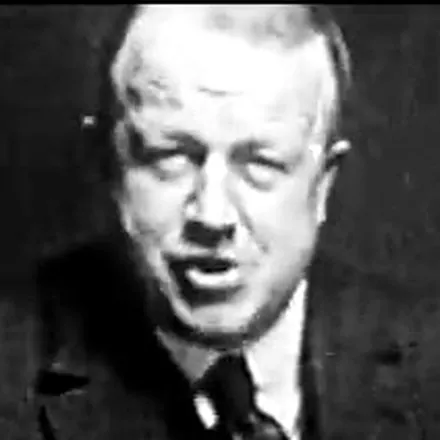
In 1911 a builder and a psychologist filmed people at work, counted the motions each job took, and designed out the ones that weren't the work. A hundred years later that is still the brief — we automate the motion, never the person.

Frank Gilbreth, head and
                    shoulders, mid-sentence — a frame from his own film.
Frank Gilbreth
builder · 1868–1924
Portrait of Lillian Moller
                    Gilbreth, 1921.
Lillian Gilbreth
psychologist · 1878–1972

Motions to lay one brick

18→5

Nobody was asked to hurry. They rebuilt the scaffold and had the bricks arrive already sorted, so laying one took five motions instead of eighteen. What went was the stooping and the fetching, not the bricklaying — so the wall went up twice as fast, not four times: 175 bricks an hour became 350.

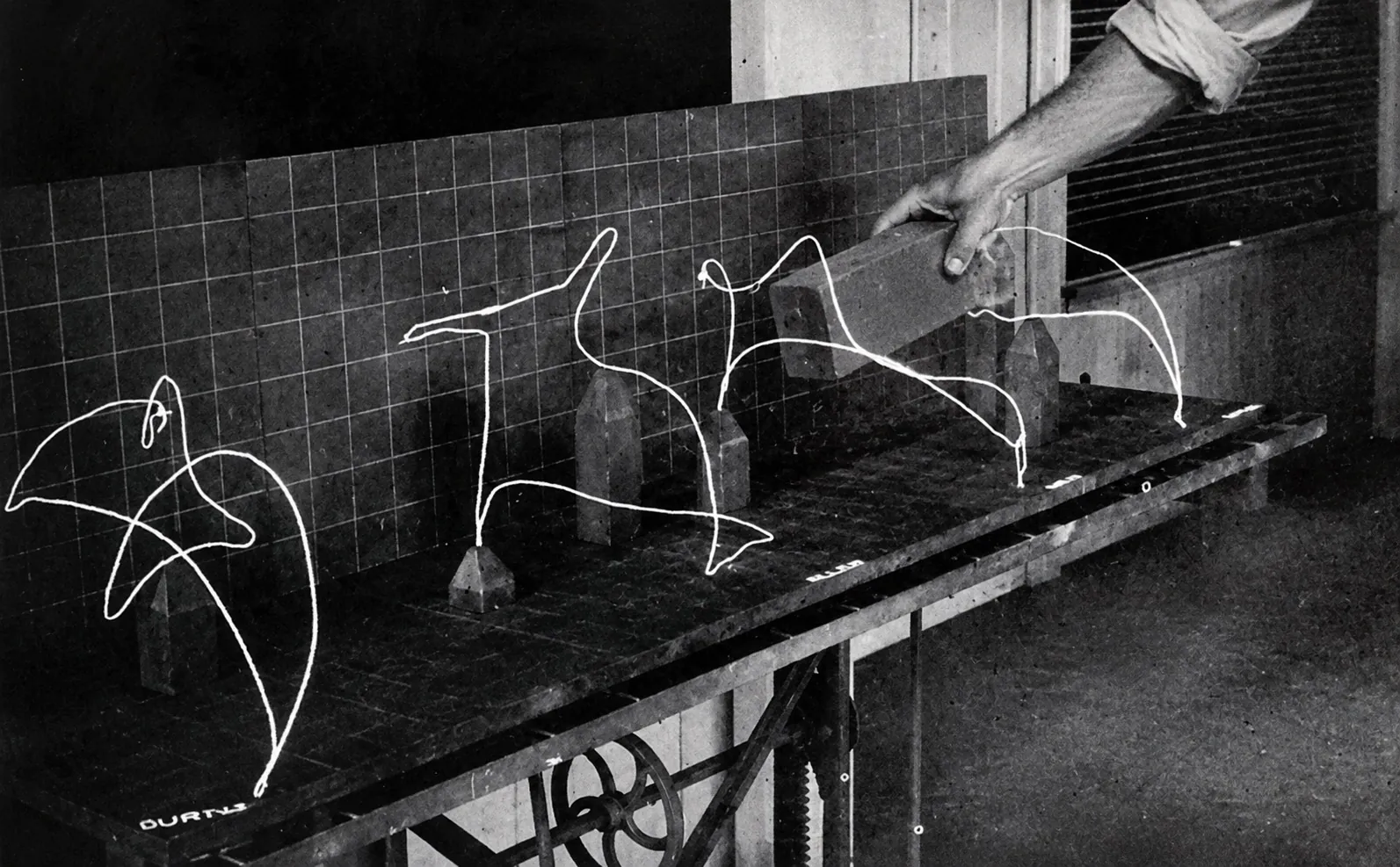
Wire models of a hand's path through the air,
                  standing in a row on a bench against a gridded backdrop, with a hand lowering a brick
                  past them.

Each wire is one path a hand took through the air, bent to match the trace on the film — the motion made into an object you could pick up and compare.

Hesitations · abrupt stops
beads close = the hand is slow

One smooth curve
beads even = one continuous move

“Skillful operators made smoothly curved motions. Unskillful operators made jerky motions, many hesitations, abrupt stops.”

Title card · Original Films of Frank B. Gilbreth, c. 1910–1924
07 · Why MillTrue

Why market leaders choose us.

We connect, we don't replace

Your ERP, CAD and CPQ stay. We build the links between them, including the strange orders standard tools refuse.

A team of senior architects and engineers leveraging the power of AI

Experienced engineers, moving at the speed AI now allows. It's how a working solution arrives in four weeks and how we can name the price before we start. Outcome-based delivery, tangible business results.

Fixed scope, price agreed upfront

You know the number before we start. No bill for every change afterwards.

You own everything

Code, repository, documentation and exit terms, from day one. No license per dealer, no license per person on the floor.